SPECIAL SESSION #25
Challenges and Advances in Vision-Based Frameworks for Monitoring and Assessment of Occupational Safety and Ergonomics
ORGANIZED BY
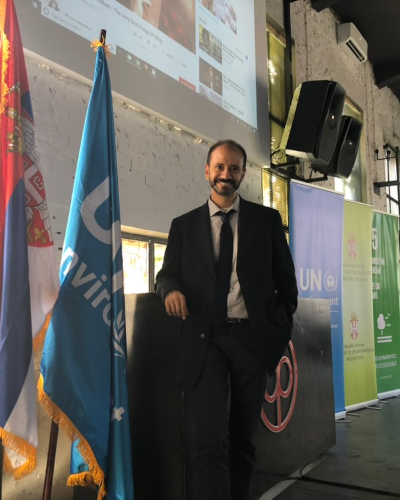 Alessandro Ledda
Alessandro Ledda
Italian National Institute for Insurance against Accidents at Work (INAIL)
 Marta Lagomarsino
Marta Lagomarsino
Italian Institute of Technology (IIT)
 Olivia Nocentini
Olivia Nocentini
Italian Institute of Technology (IIT)
SPECIAL SESSION DESCRIPTION
Vision-based sensing is becoming a key enabler for monitoring and assessment in occupational safety and ergonomics, thanks to its ability to deliver contactless, scalable, and online measurements in complex and dynamic working environments. From worker state monitoring (e.g., vigilance, fatigue, or potential medical distress) to Personal Protective Equipment (PPE) compliance and role-aware suitability checks, and from detection of unauthorized access to recognition of critical incidents (e.g., a person lying on the ground), vision-based frameworks can support prevention, situational awareness, and faster responses. Beyond human-centric monitoring, vision can also contribute to environmental and plant safety by detecting smoke, gas leaks, abnormal emissions, infrastructure anomalies, and early signs of equipment degradation.
Despite this rapid expansion, significant open challenges remain before vision-based frameworks can be considered reliable, trustworthy, and deployable at scale in safety-critical occupational settings:
- Robust perception under real-world conditions, requiring machine learning and computer vision algorithms that can generalize across occlusions, cluttered scenes, variable illumination, weather conditions, motion blur, camera viewpoints, and domain shifts across sites, tasks, and operational contexts;
- Quantification of uncertainty, reliability, and explainability, including confidence estimation, failure detection, explainable AI strategies to reduce false alarms and missed detections while motivating and justifying system decisions in safety-critical settings;
- Privacy-preserving and ethical vision methodologies, as continuous video monitoring can capture identifiable individuals and sensitive workplace situations. This raises fundamental research questions on anonymised representation (e.g., keypoint-based models), on-device and edge processing, federated learning, and privacy-by-design approaches that ensure compliance with GDPR and emerging regulations without compromising system performance.
This special session aims to bring together contributions on methodological advances, experimental validation, and deployment strategies for trustworthy vision-based monitoring and assessment in occupational safety and ergonomics. The session will foster interdisciplinary dialogue among engineers, machine learning researchers, metrology experts, occupational health and safety specialists and scholars in ethics and regulation.
TOPICS
The special session welcomes contributions on (but not limited to) the following topics:
- Vision-based measurement systems for occupational safety and ergonomics;
- Computer vision and machine learning methods for worker state monitoring and physical and cognitive ergonomics assessment;
- Vision-based detection of safety-critical events and infrastructures;
- Robustness, reliability, and uncertainty analysis in vision-based monitoring systems;
- Validation, benchmarking, and performance assessment of vision-based measurement frameworks;
- Integration of vision systems with IoT, edge computing, and robotic systems;
- Applications of vision-based frameworks in industrial and occupational settings;
- Privacy-aware and ethically compliant with AI-based technologies.
ABOUT THE ORGANIZERS
Alessandro Ledda (Ph.D.) is currently a Senior Researcher at INAIL, Department of Technological Innovations and Safety of Plants, Products and Anthropogenic Settlements. His work focuses on applied research and technology transfer in occupational safety, with particular attention to smart PPE, safety-driven innovation, and the use of enabling technologies (including sensing and drones) in hazardous working contexts, also within multi-partner research projects. He holds university teaching appointments and regularly contributes to postgraduate education. He has a long-standing record of academic teaching and training activities. He has been a speaker at more than 70 technical-scientific events and is the author or co-author of approximately 90 scientific and technical publications.
Marta Lagomarsino (Ph.D.) received the B.Sc. degree in biomedical engineering in 2018 and the M.Sc. degree in robotics engineering in 2020 from the University of Genoa, Genoa, Italy. She received the Ph.D. degree in bioengineering from Politecnico di Milano, Milan, Italy, in 2023, in collaboration with the Human-Robot Interfaces and Interaction (HRII) Laboratory of the Istituto Italiano di Tecnologia, where she is currently a Postdoctoral Researcher. Her research interests include vision-based human state and ergonomics assessment, socio-physical human-robot interaction, and mutual human-robot adaptation.
Olivia Nocentini (Ph.D.) received her B.S. degree in Biomedical Engineering from the University of Pisa, in 2014, and her M.S. degree in Robotics and Automation Engineering in 2018. She earned her Ph.D. in BioRobotics from Scuola Superiore Sant'Anna in 2023. She is currently a Postdoctoral Researcher at the Italian Institute of Technology, focusing on computer vision and human action.